Data for assessing submerged components
Underwater non-destructive testing
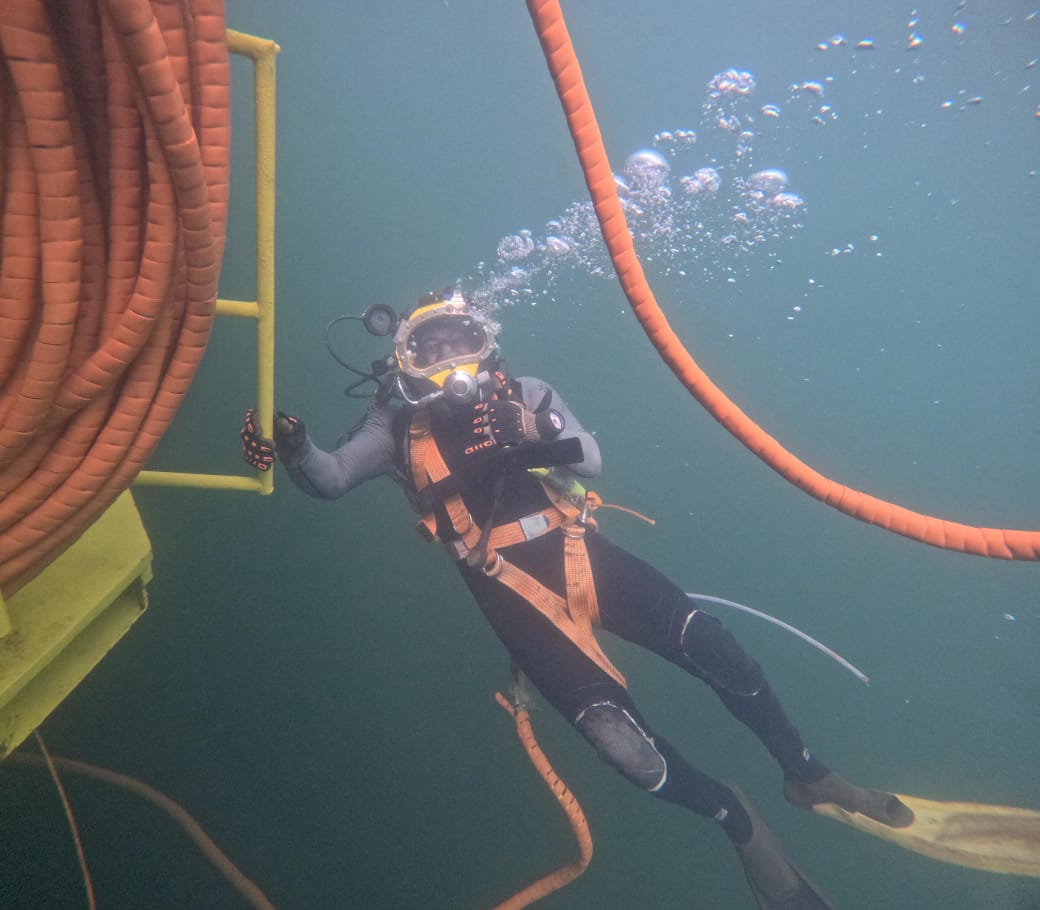
Non-destructive testing, known as NDT or END in Portuguese, must address a clear technical question about the component being assessed. The scope may include collecting and recording data using a predefined method. The responsible engineer selects the technique, required qualifications and evaluation criteria, considering material, geometry, accessibility and underwater environmental conditions.
Applications
A scope tailored to your asset.
Feasibility, methods and required resources depend on the technical assessment of each project.
Assessment of metal components
Testing is planned according to the material, geometry and inspection objectives. The applicable technique and preparation conditions must be confirmed before assessment points are defined.
Monitoring conditions over time
The scope may include identified measurement points and comparable records to support component monitoring. Comparisons must account for the methods used and the limitations of each survey.
Inspection associated with interventions
Definition of checks required before or after an intervention, according to the design and agreed criteria. Testing coverage must match the technical question and available access.
Traceability
Define the deliverables.
Documentation and acceptance criteria should be agreed in the technical proposal according to the nature of the intervention.
- Inspection plan defining objectives, methods, coverage and assessment points.
- Records of results and conditions that may affect their interpretation.
- Qualification and equipment documentation required for the contracted method.
- Technical report based on the evaluation criteria and responsibilities defined in the scope.
Integrated management
Quality, safety and environmental responsibility.
Atlas holds ISO 9001, ISO 14001 and ISO 45001 certifications. View our certificates and Integrated Management System Policy.
Commercial diving planning takes NORMAM-222/DPC and operation-specific requirements into account.
Certifications and complianceContracting questions
Questions about non-destructive testing.
What is the difference between END and NDT?
END is the Portuguese abbreviation for non-destructive testing; NDT is the English abbreviation. Neither specifies a particular method: the technique must be selected according to the component and inspection objectives.
Which method will be used for the underwater inspection?
The method depends on the material, geometry, objectives, access and environmental conditions. Its application, available resources and required qualifications must be confirmed in the technical assessment and proposal.
Does the test report determine the structure’s remaining service life?
Results are subject to the coverage and limitations of the contracted method. Conclusions about service life or integrity may require calculations, operating history and further assessments by the responsible engineering team.